
Most Australian organisations have the same AI problem right now. The proof of concept worked. Leadership approved the budget. And then everything stalled.


The gap between a successful AI experiment and a production-grade enterprise deployment is wider than anyone expected. Models need governance. Agents need monitoring. Compliance teams need audit trails. Security teams need threat visibility. And the IT team is trying to stitch it all together from five different Azure services.
Microsoft Foundry — the evolution of Azure AI Studio — was designed to close exactly this gap. For mid-market organisations looking to move AI from the lab to the business, this platform changes the equation.
The Real Problem Is Not AI Models — It’s Operations
Access to powerful AI models stopped being the bottleneck over a year ago. GPT-4o, Claude, DeepSeek-R1, Llama, Mistral — the options are abundant and accessible.
The bottleneck is everything that surrounds the model. Deployment pipelines. Compliance enforcement. Cost management. Agent lifecycle governance. Security testing. Observability across production workloads.
When an organisation runs three AI proofs of concept across different teams, each using different tools and frameworks, the operational complexity multiplies. What started as innovation becomes technical debt before the first agent reaches production.
What Microsoft Foundry Delivers as an Enterprise AI HQ
Microsoft Foundry consolidates agents, models, and tools under a single Azure resource with built-in enterprise controls. Rather than managing separate Azure OpenAI, Azure AI Services, and Azure ML resources independently, organisations get one platform with unified RBAC, networking, and policy management.
A Unified Control Plane for the Entire AI Fleet
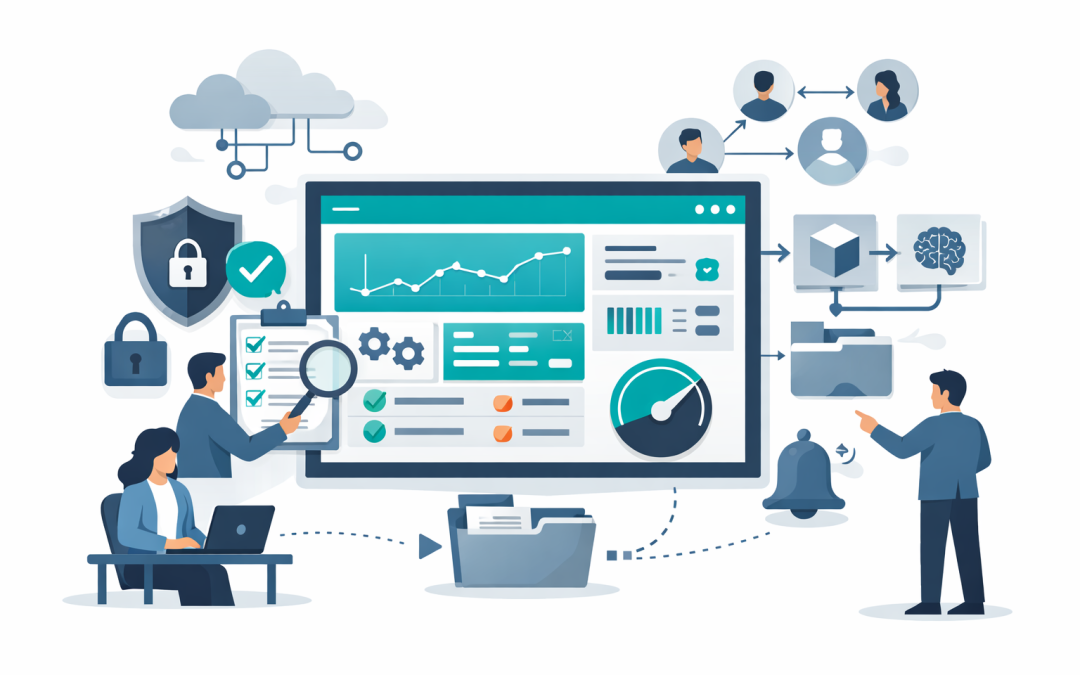
The Foundry Control Plane provides fleet-wide visibility across every AI agent, model deployment, and tool in a subscription. A single dashboard surfaces health scores, cost trends, token usage, compliance posture, and active alert summaries.
This solves one of the most common governance complaints: nobody knows what AI assets the organisation is actually running. The Control Plane eliminates discovery exercises and puts the answer in one searchable interface.
For organisations managing agents from multiple platforms — including non-Microsoft sources — the Control Plane supports multi-platform agent registration and monitoring. Custom agents built outside Foundry can be brought into the same governance framework.
Compliance That Aligns With Australian Requirements
The Compliance pane integrates directly with Azure Policy, Microsoft Defender, and Microsoft Purview. Organisations define guardrail policies once and enforce them across every agent and model deployment. Versioned policies maintain full auditability. Real-time compliance monitoring surfaces noncompliant assets immediately. Bulk remediation corrects configurations at fleet scale.
For Australian organisations working toward Essential 8 maturity or aligning with ACSC guidelines, this consolidation is significant. AI compliance reporting shifts from a multi-week discovery project to a single pane of glass.
Privacy legislation adds another layer. When AI agents process customer data, organisations need clear audit trails showing what data flowed where and what controls were in place. Foundry’s integration with Microsoft Purview provides this transparency without building custom logging infrastructure.
Over 11,000 Models With Intelligent Routing
Foundry Models provides access to a catalogue of over 11,000 models — GPT-5.4, GPT-4o, Claude Sonnet 4.6, DeepSeek-R1, Phi, Llama, Mistral, and many more — through a single resource. The model router can automatically select the best model per request based on organisational quality and cost thresholds.
This matters because the model landscape changes every quarter. The model chosen today may not be the right choice in six months. A platform that absorbs model churn without forcing architecture rework protects the organisation’s investment and reduces replatforming risk.
Security Testing Built Into the Platform
Foundry integrates an AI Red Teaming Agent directly into the management plane. This delivers automated vulnerability probing, regression testing, and drift monitoring across the agent fleet.
Most organisations have not yet incorporated offensive security testing for AI into their standard processes. Microsoft shipping this as a platform capability — not a separate purchase or third-party add-on — raises the baseline for every organisation on the platform.
When boards ask how AI systems are being tested for risk, IT leaders have a concrete, built-in answer.
From Five SDKs to One Project Client
One of the most underappreciated improvements in Foundry is the SDK consolidation. What previously required five separate packages — azure-ai-inference, azure-ai-generative, azure-ai-ml, and others — now collapses into a unified project client through azure-ai-projects 2.x.
Development teams working with Foundry write against a single endpoint using a consistent API surface. SDKs are available for Python, C#, JavaScript/TypeScript, and Java. The VS Code extension provides direct model exploration and agent development from within the IDE.
For development teams, this reduces onboarding time, simplifies dependency management, and makes it practical to build agents that work across different model providers without rewriting integration code.
Why This Matters for Australian Mid-Market Organisations
Large enterprises can afford dedicated AI platform teams to custom-build orchestration layers and manage every component separately. Mid-market organisations between 50 and 500 employees cannot sustain that level of investment.
The platform decision comes down to a fundamental question: build a custom stack from separate components and hope it stays maintainable, or adopt a managed platform that handles governance, compliance, and operations out of the box?
Microsoft Foundry pushes this equation firmly toward the managed platform. The unified resource model eliminates multi-service complexity. The Control Plane provides enterprise governance without enterprise headcount. The compliance integrations work with existing Azure and Microsoft 365 investments rather than requiring new tooling.
For organisations already running Microsoft 365 and Azure — which describes the majority of the Australian mid-market — the integration path is straightforward. Foundry operates within existing Azure subscriptions, existing Entra ID configurations, and existing network architectures.
The Conversation Has Shifted
Six months ago, the boardroom AI conversation was about use cases and experimentation. Today, boards are asking harder questions. Who governs the AI agents? How do we prove compliance? What’s the cost trajectory? What happens when something goes wrong?
Foundry gives IT leaders a credible, single-platform answer. Centralised governance. Integrated compliance. Automated security testing. Fleet-wide observability. Intelligent model routing. And a development experience that doesn’t require a separate team to manage.
The gap between AI experimentation and enterprise-grade deployment is real — but it no longer requires a custom-built bridge to cross it.
CloudProInc helps mid-market Australian organisations evaluate, architect, and implement AI platforms built on Microsoft Foundry. If your organisation is ready to move from AI experimentation to production-grade deployment, our team can help map the path forward.