
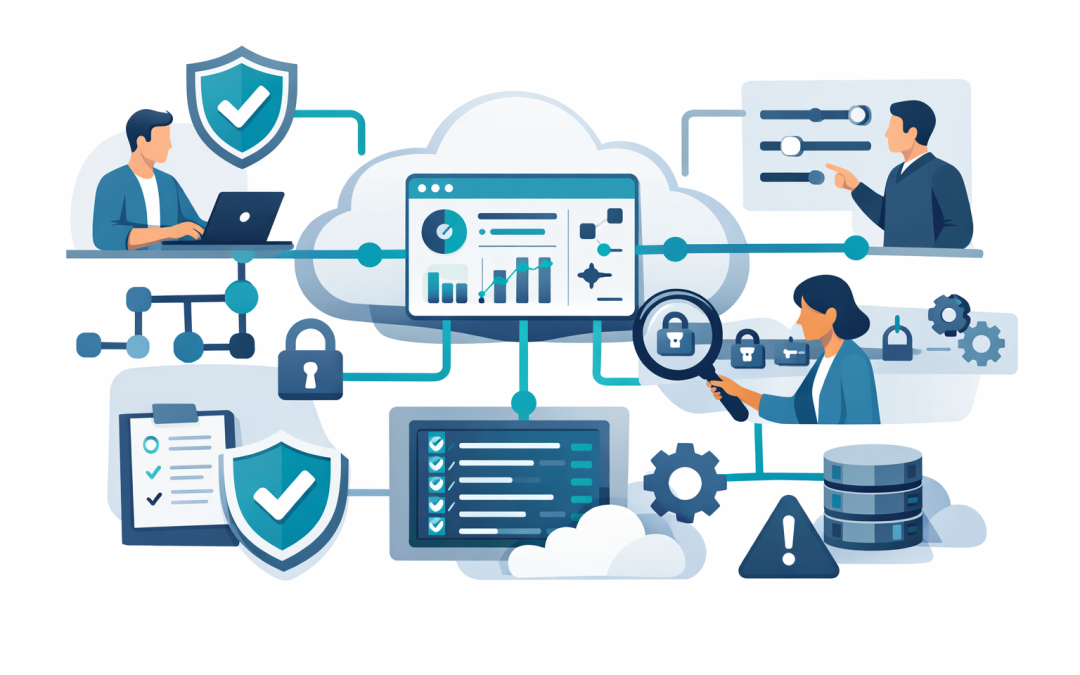
Most Australian organisations that started building AI capabilities in the last two years are hitting the same wall. The proof of concept worked. The board approved the next phase. And now IT teams are drowning in questions nobody planned for.
Where do the models run? Who approves new deployments? How does the organisation trace what an agent did when it produced an incorrect answer for a customer? What happens when the team that built the original prototype moves on?
These aren’t edge cases. They’re the default state of enterprise AI in Australian mid-market organisations right now.
Microsoft AI Foundry — now officially called Microsoft Foundry — is designed to address exactly this gap. For Australian organisations between 50 and 500 employees, it represents the first credible platform that covers the full AI stack without requiring teams to stitch together five separate services and hope they stay compatible.
The Problem Australian Organisations Actually Face
The challenge isn’t access to AI models. That problem was solved two years ago. The real challenge is governance, compliance, and operational control at enterprise scale.
Australian organisations face specific pressures that global vendors often overlook. The Essential 8 maturity model sets clear expectations for cybersecurity controls. The ACSC provides guidelines that boards and risk committees increasingly reference in AI discussions. Privacy legislation adds another layer of complexity around how data flows through AI systems.
When an organisation deploys AI agents across multiple business units with no centralised governance layer, every one of these compliance conversations becomes exponentially harder. Instead of pointing to one control plane, IT leaders find themselves explaining governance across fifteen different Azure services.
What Foundry Actually Delivers
Microsoft Foundry consolidates agents, models, and tools under a single Azure resource with unified role-based access control, networking, and policies. For IT leaders evaluating AI platforms, this translates into several practical advantages.
Model Flexibility Without Lock-In
Foundry Models provides access to over 11,000 models — including GPT-4o, Claude, DeepSeek-R1, Phi, Llama, and Mistral — through a single resource. The model router automatically selects the best model per request based on quality and cost thresholds defined by the organisation.
This matters because the model landscape changes every quarter. The model an organisation picks today will not be the best model in six months. A platform layer needs to absorb that churn without forcing architecture changes or expensive replatforming exercises.
Agent Orchestration That’s Production-Ready
The Foundry Agent Service supports multi-agent orchestration with workflow definitions, a tool catalogue with over 1,400 connectors, conversation memory, and direct publishing to Teams or Microsoft 365 Copilot.
For organisations already invested in the Microsoft ecosystem — which describes the majority of Australian mid-market businesses — having agents deploy straight into Teams and M365 Copilot eliminates an entire integration layer that would otherwise need to be custom-built.
A Governance Layer That Speaks to Boards
Foundry Control Plane is where the platform becomes genuinely compelling for Australian enterprises. It provides centralised management of all agents, models, and tools across the organisation. Unified RBAC. Azure Policy integration. Full authentication support for both MCP and A2A protocols.
The compliance pane integrates with Azure Policy, Microsoft Defender, and Microsoft Purview. Guardrail policies are defined once and enforced across the entire agent fleet. Versioned policies with full auditability. Real-time compliance monitoring. Bulk remediation for noncompliant configurations.
For organisations working toward Essential 8 maturity or aligning with ACSC guidelines, having a single governance surface for AI assets simplifies the compliance conversation from a multi-week discovery exercise to a single dashboard review.
Observability Across the Full Agent Chain
Most AI observability focuses on individual model calls. When an agent chains three tools, two model calls, and a knowledge lookup, organisations need trace-level visibility across the entire sequence.
Foundry provides built-in tracing for agent workflows, continuous evaluation dashboards, and model performance monitoring — all accessible from the portal without bolting on additional monitoring infrastructure.
The integration with the AI Red Teaming Agent deserves particular attention. Automated vulnerability probing and regression testing, built into the management plane. Microsoft is shipping offensive security testing for AI as a platform feature — a capability most Australian organisations have not yet considered as a requirement, but one that significantly raises the security baseline.
Why This Matters Specifically for Australian Mid-Market
Large enterprises with dedicated AI platform teams can afford to build custom orchestration layers, write their own governance tooling, and hire specialists for every component. Mid-market organisations cannot.
For businesses running between 50 and 500 employees, the AI platform decision is fundamentally a build-versus-buy decision. Build a custom stack from open-source components and pray it stays maintainable? Or adopt a managed platform that handles the undifferentiated heavy lifting?
Microsoft Foundry tilts this equation significantly toward the managed platform approach. The unified SDK (azure-ai-projects 2.x) collapses what used to be five different packages into one project client against one endpoint. The single resource model eliminates the infrastructure complexity of managing separate Azure OpenAI, Azure AI Services, and Azure ML resources.
For Australian organisations already running Microsoft 365 and Azure, the integration path is straightforward. Foundry works within existing Azure subscriptions, leverages existing Active Directory configurations, and respects existing network architectures. The adoption barrier is lower than any comparable alternative.
What Australian IT Leaders Should Be Evaluating Now
Organisations that are serious about enterprise AI should be evaluating Foundry against five criteria:
Data sovereignty and residency. Foundry is available in the Australia East region. Understanding which models are available in-region versus which require cross-region deployment is critical for organisations with data residency requirements.
Essential 8 alignment. The unified RBAC and Azure Policy integration in Foundry Control Plane map naturally to several Essential 8 controls. Organisations should map their current maturity level against the governance capabilities Foundry provides.
Cost visibility. Foundry’s consumption-based pricing means organisations pay for what they use. The quota management tools provide visibility into model usage patterns — essential for building business cases and managing ongoing costs.
Integration with existing Microsoft investments. Organisations that already run Microsoft 365, Azure AD, and Intune will find the integration surface significantly wider than competing platforms. This reduces both implementation cost and operational overhead.
Team readiness. Foundry’s unified SDK and portal simplify the developer experience, but organisations still need the architectural capability to design multi-agent systems, define governance policies, and operate AI workloads at scale.
The Opportunity and the Risk
The opportunity is clear. Microsoft Foundry is the most comprehensive managed AI platform available today for organisations in the Microsoft ecosystem. It addresses model access, agent orchestration, governance, observability, and compliance under a single resource.
The risk is equally clear. Organisations that delay their platform decision will continue accumulating AI assets without governance, building technical debt that becomes harder to remediate with every new agent or model deployment.
The window for getting enterprise AI architecture right is now. Foundry does not remove the need for architectural thinking — but it provides the foundation layer that makes good architecture achievable without building everything from scratch.
Australian organisations that evaluate and adopt the right AI platform in 2026 will have a structural advantage over those still assembling their stack from disconnected components in 2027.
CPI is a Microsoft Partner and Wiz Security Integrator based in Melbourne, helping Australian organisations design and implement enterprise AI, cloud, and cybersecurity solutions. To discuss how Microsoft Foundry fits into your organisation’s AI strategy, get in touch.