
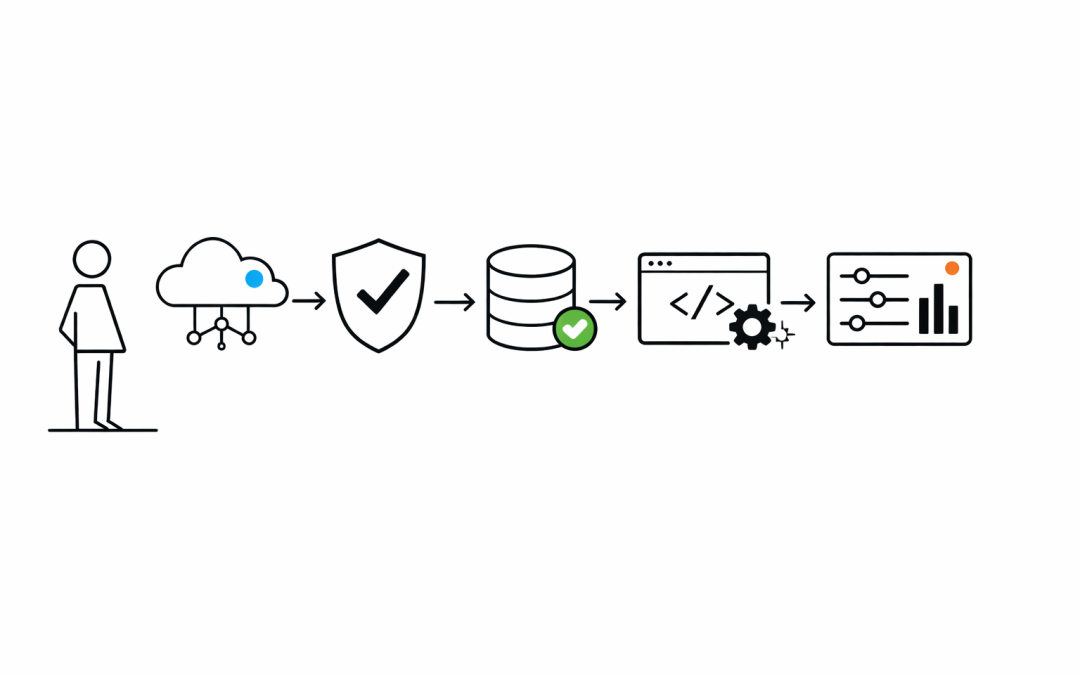
For many Australian organisations, the hardest part of enterprise AI is not choosing a model. It is getting through procurement, security review, architecture sign-off, billing approval, and governance without creating another disconnected platform that adds risk and cost.


This is why OpenAI’s June 1, 2026 announcement matters far beyond a product update. It changes how CIOs, IT Directors, and CTOs should think about vendor selection, control planes, and long-term AI operating models.
It is also worth being precise about the source. While the title uses “GitHub’s OpenAI” as framing because many leaders associate modern developer workflows with GitHub and OpenAI together, the actual announcement came from OpenAI.
What Actually Changed
OpenAI announced on June 1, 2026 that its frontier models and Codex are now generally available on AWS. Those OpenAI models are available on Amazon Bedrock, and Codex on Amazon Bedrock brings OpenAI’s software engineering agent into the AWS environment many enterprises already use.
OpenAI says Codex is used by more than 5 million people every week. It also positions this AWS availability as a way to reduce friction around procurement, security review, production readiness, billing, compliance, governance, and deployment workflows.
The announcement also matters for regulated and security-conscious environments because availability includes AWS Commercial and GovCloud regions. OpenAI further signalled that AWS availability is planned for Daybreak, including cyber models and Codex Security.
A day later, on June 2, 2026, OpenAI added another important signal. Codex is expanding beyond developers through role-specific plugins, annotations, and preview sites, with non-developers now making up about 20% of overall Codex users and growing more than three times as fast as developers.
Why This Changes the Multi-Cloud AI Conversation
For the last wave of enterprise AI decisions, many organisations treated the model vendor and the cloud control plane as almost the same decision. If a business wanted a certain model family, it often felt pushed toward the ecosystem where that model was easiest to buy, secure, and govern.
That is what changes here. When OpenAI models and Codex are available through Amazon Bedrock, the discussion shifts from “Which cloud do we have to choose to get access?” to “Which operating model gives us the most control?”
That is a major difference for mid-market enterprises. It means AI strategy can start looking more like a control-plane decision and less like a forced platform dependency.
For CIOs, that matters because cloud choices are rarely made on model quality alone. They are shaped by existing landing zones, commercial agreements, security tooling, architecture standards, and how quickly internal teams can move from pilot to production.
Procurement Friction Is Now a Board-Level Issue
Most enterprise AI projects do not slow down because the use case is weak. They slow down because the business must answer basic operational questions about who approves spend, where data sits, which team owns the platform, how billing works, and how risk is monitored.
OpenAI explicitly framed the AWS move around reducing friction in procurement, security review, production readiness, billing, compliance, governance, and deployment workflows. That language is important because it speaks directly to the real blockers that slow AI adoption inside larger organisations.
For Australian businesses, this is especially relevant where buying processes are often conservative and cross-functional. Technology leaders are not just selling an AI outcome internally; they are also selling a path that finance, procurement, cyber, legal, and operations can all live with.
When a model provider meets the enterprise inside an existing cloud procurement and governance framework, the adoption path becomes simpler. In practice, that can matter more than a marginal difference in benchmark performance.
Codex on Bedrock Means the Control Plane Matters More Than Ever
Codex is not just another model endpoint. OpenAI describes it as a software engineering agent, which means the conversation quickly expands from inference to workflow orchestration, permissions, auditability, deployment patterns, and how far an organisation is willing to let AI act inside real delivery environments.
That makes Amazon Bedrock more than a hosting destination in this context. It becomes part of the enterprise control plane for how OpenAI capabilities are accessed, governed, and operationalised.
This distinction matters because AI decisions are now increasingly about system design, not just model access. The winning architecture is often the one that gives the business a clean way to manage approvals, identity boundaries, cost visibility, and operational consistency across teams.
The June 2 OpenAI update reinforces that point. If Codex is expanding beyond developers through role-specific plugins, annotations, and preview sites, and non-developers already account for about 20% of users while growing much faster than developers, then this is no longer only a developer tooling conversation.
It becomes an enterprise workflow conversation. Once AI agents start serving engineering, operations, security, and business teams differently, leaders need a governance model that scales across roles, not just across APIs.
How Microsoft-Centric and AWS-Centric Organisations Should Think About the Choice
Microsoft-centric organisations should avoid treating this as a reason to swing platforms reactively. The better question is whether OpenAI through AWS creates useful leverage in areas where the organisation already has stronger AWS controls, commercial alignment, or engineering workflows.
In other words, this is not necessarily a migration story. It may be a portfolio story, where the organisation uses the control plane that best matches the workload, the team, and the governance requirement.
AWS-centric organisations now have a clearer path to adopt OpenAI models and Codex without introducing as much procurement and governance disruption. That can reduce the pressure to bolt on separate tooling and parallel approval processes just to get access to a preferred AI capability.
For both camps, the wrong approach is to make AI platform choices team by team. That leads to duplicate spend, fragmented security reviews, inconsistent policy enforcement, and no single view of where AI is being used or how it is being governed.
The better approach is to decide a few core things early. Which control plane will carry the most critical AI workloads, where exceptions will be allowed, how security review will be standardised, and how the business will compare cloud convenience against long-term bargaining power with vendors.
What Enterprise Leaders Should Do Next
This announcement should prompt a strategy review, not a procurement rush. The core question is whether the organisation’s current AI architecture still reflects business priorities now that model access and cloud hosting are becoming less tightly coupled.
Our team would advise leaders to revisit vendor selection criteria with a wider lens. Model quality still matters, but governance fit, procurement simplicity, control-plane consistency, and security review effort now deserve equal weight.
It is also time to map AI workloads by operating pattern. Some will suit a Microsoft-heavy environment, some will sit more naturally in AWS, and some may justify a deliberately multi-cloud design if the governance model is strong enough to support it.
The point is not to chase every new release. It is to build an AI estate that the business can actually manage.
The Bigger Shift Behind the Announcement
The real significance of OpenAI coming to AWS is that it weakens the old assumption that enterprise AI choices must follow a single cloud lane. As model providers spread across control planes, buyers gain more room to optimise for governance, commercial flexibility, and operational fit.
That is why this announcement changes the multi-cloud AI conversation. It moves the enterprise discussion away from access and toward architecture, away from hype and toward operating discipline.
For Australian mid-market organisations, that is a useful shift. It gives technology leaders a better chance to choose AI platforms based on control, accountability, and business readiness rather than simply taking the path of least resistance.
If your organisation is now weighing Microsoft-led and AWS-led AI options, our team can help assess the trade-offs in plain business terms so the next decision improves governance as well as capability.