
In this blog post What Kimi K3 Matching Claude Opus 4.8 Means for AI Strategy we will explain why the arrival of another highly capable AI model matters to your costs, security and long-term technology plans.


If your business has spent months assessing ChatGPT, Claude or Microsoft’s AI services, the emergence of Kimi K3 may feel like another distraction. Just as your team gets comfortable with one model, a new benchmark claims that a different model is faster, cheaper or smarter.
The important news is not that every company should replace Claude with Kimi. It is that advanced AI capability is becoming available from more providers, including providers offering greater control over how their models are deployed. That could improve your negotiating position, reduce dependence on one vendor and make previously expensive AI projects more practical.
What is Kimi K3 in plain English?
Kimi K3 is a large AI model developed by Moonshot AI. Like Claude Opus 4.8, it is designed to handle difficult work such as software development, research, document analysis and multi-step business processes.
These systems are large language models. In simple terms, they learn patterns from enormous collections of information and use those patterns to understand requests, produce content, analyse material and decide what action to take next.
Kimi K3 uses a design called a mixture of experts. Rather than activating the entire model for every request, it sends different parts of a task to the sections best suited to handle them. Think of it as assigning a contract question to a legal specialist and a spreadsheet question to a finance specialist, instead of asking every department to work on both.
It also supports very long inputs and can work with text and visual material. This can help when an organisation needs AI to examine large policy collections, software projects, reports, diagrams or lengthy customer records without breaking everything into hundreds of small prompts.
Moonshot’s published testing indicates that Kimi K3 can compete with or exceed Claude Opus 4.8 on several coding and AI agent tests. AI agents are systems that can plan and complete a series of actions, such as checking documents, updating a system and preparing a report, rather than answering only one question.
Why matching Claude Opus 4.8 matters
1. High-quality AI is becoming less scarce
Until recently, many business AI decisions were dominated by a small group of US providers. Kimi K3 suggests the performance gap between leading closed models and newer open-weight alternatives is narrowing.
Open-weight means qualified organisations can access the model’s underlying trained components and potentially run them through infrastructure they control. It does not automatically mean the model is free, easy to operate or suitable for every business.
For CIOs, the business outcome is more choice. If two or three models can complete a task to an acceptable standard, you can compare them on total cost, security, availability and contract conditions instead of paying a premium simply because one model is the only viable option.
2. Your AI strategy should not depend on one model
Model rankings can change within months. Building every AI workflow around one provider may create a difficult and expensive migration later, particularly if prompts, integrations and security controls are tightly connected to that provider.
A better approach is to separate the business process from the model wherever practical. Your document workflow, approval rules, audit records and access controls should remain consistent even if the AI engine changes.
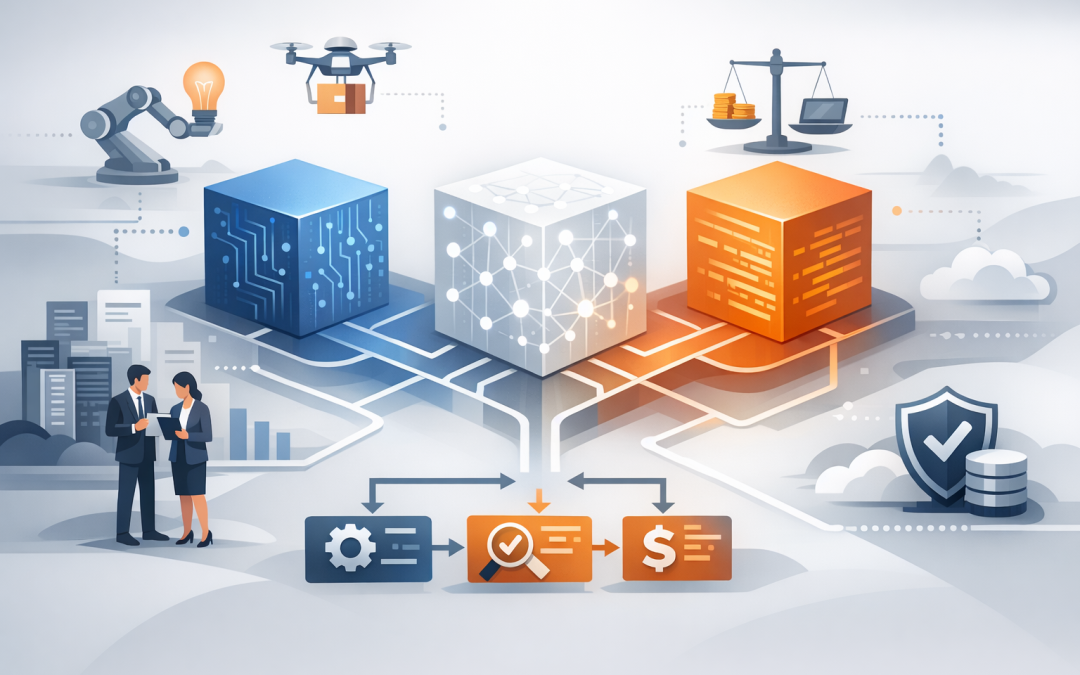
This supports model routing, which simply means sending each task to the model that offers the right balance of quality, cost and risk. Claude Opus 4.8 might handle sensitive or highly complex analysis, while another approved model processes high-volume summaries or software testing.
This extends the model-selection approach discussed in our practical AI model scorecard. The smartest model on a public leaderboard is not necessarily the best model for every business process.
3. Open weights create control and responsibility
Kimi K3’s open-weight direction may appeal to organisations that want more control over where information is processed. This could be relevant for businesses handling sensitive intellectual property, regulated records or customer information.
However, self-hosting a model of this scale is not the same as installing normal business software. It can require expensive computing equipment, specialist engineering skills, ongoing security work and careful performance monitoring.
The real comparison is therefore not just the model’s usage price. It is the total cost of infrastructure, staff, integration, cybersecurity, support and compliance.
For many mid-market organisations, a managed model inside an established cloud environment may remain the safer option. As covered in our article on Claude Opus 4.8 in Azure AI Foundry, using a model through your existing Microsoft environment can make identity controls, monitoring and procurement easier to manage.
4. Benchmark results are a shortlist, not a business case
A benchmark is a standardised test used to compare AI models. It can show whether a model is good at solving coding problems, finding information or following complex instructions.
It cannot tell you whether the model understands your contracts, follows your approval process or produces reliable answers using your company data. It also cannot measure how much staff time will be spent checking its work.
Before approving a model, test it against 30 to 50 examples from your own business. Include difficult cases, incomplete information and requests it should refuse.
Measure accuracy, review time, cost per completed task and the consequences of an incorrect answer. A model that costs less per request can become more expensive if employees must repeatedly correct it.
5. Data governance matters more than model nationality alone
Because Moonshot AI is a Chinese company, Australian organisations will reasonably ask where prompts are processed, who can access them and whether information is retained. These questions should be answered through technical and contractual checks, not assumptions.
You need to know the hosting location, service provider, data retention policy, training policy, encryption controls and incident response process. You must also consider obligations under the Australian Privacy Act and the Australian Privacy Principles when personal information is involved.
AI systems should sit behind the same disciplined security controls used for other business technology. That includes restricted administrator access, device protection, logging and alignment with the Essential Eight, the Australian Government’s cybersecurity framework that many organisations use to reduce common attack risks.
An example of where the savings could appear
Consider a 200-person professional services firm spending $12,000 each month on AI model usage across document review, proposal preparation and internal software work. The firm currently sends every request to one premium model.
Testing finds that a lower-cost model can safely handle half of those requests while meeting the same accuracy target. If that approved model is 30% cheaper for those tasks, the organisation could save about $1,800 per month, or $21,600 per year.
The firm keeps its premium model for complex legal and financial work. It also keeps one approval process, one set of access controls and one audit trail across both models.
This is the practical opportunity created by Kimi K3. It is not necessarily a complete replacement for Claude Opus 4.8. It is a credible alternative that may help businesses use expensive models more selectively.
What should CIOs do next?
- List your current AI workloads. Identify the tasks, users, information involved and monthly costs.
- Separate low-risk and high-risk work. Marketing drafts and internal summaries should not be governed in the same way as legal, financial or customer decisions.
- Create a repeatable test set. Compare models using real examples and clear pass-or-fail requirements.
- Review deployment options. Check where data is processed, how it is retained and whether the model can work with your Microsoft security controls.
- Plan for model changes. Avoid designing workflows that can never move to another provider.
Our framework for navigating AI vendor selection provides a broader checklist for comparing capability, commercial stability, governance and business value.
The real message for business leaders
Kimi K3 matching Claude Opus 4.8 on selected tests does not make Claude obsolete. It shows that capable AI is becoming a competitive market where businesses can demand better prices, more deployment choices and fewer restrictions.
The winners will not be the companies that chase every new model. They will be the companies that build secure, measurable AI processes that can take advantage of better models as they appear.
CloudProInc brings more than 20 years of enterprise IT experience to this work. As a Melbourne-based Microsoft Partner and Wiz Security Integrator, we help organisations assess AI alongside Azure, Microsoft 365, Microsoft Defender and practical cybersecurity requirements rather than treating the model as an isolated purchase.
If you are not sure whether your current AI setup is costing more than it should, or exposing information your team has not considered, we are happy to take a practical look with you — no strings attached.