by CPI Staff | Feb 5, 2026 | Blog, LLM
In this blog post Detecting Backdoors in Open-Weight LLMs Practical Steps for Teams we will walk through a pragmatic approach to finding hidden “sleeper” behaviours in open-weight language models before they reach production. Detecting Backdoors in Open-Weight LLMs...
by CPI Staff | Sep 25, 2025 | AI, Blog, LLM
In this blog post What Are Weights in AI Models and Why They Matter for Accuracy we will unpack what weights are, why they’re central to every prediction your model makes, and how to manage them well in production. At a high level, weights are the dials an AI model...
by CPI Staff | Sep 25, 2025 | Blog, LangChain, LLM
In this blog post Supercharge LangChain apps with an LLM cache for speed and cost we will show how to make LangChain applications faster, cheaper, and more reliable by caching LLM outputs. Supercharge LangChain apps with an LLM cache for speed and cost is about one...
by CPI Staff | Sep 18, 2025 | AI, Blog, LLM
In this blog post The Autonomy of Tensors for Smarter we will explore what gives tensors their “autonomy,” why it matters for both engineers and leaders, and how to put it to work in production. Tensors are often described as multi‑dimensional arrays. That’s true, but...
by CPI Staff | Sep 15, 2025 | Blog, LLM, Phi-3
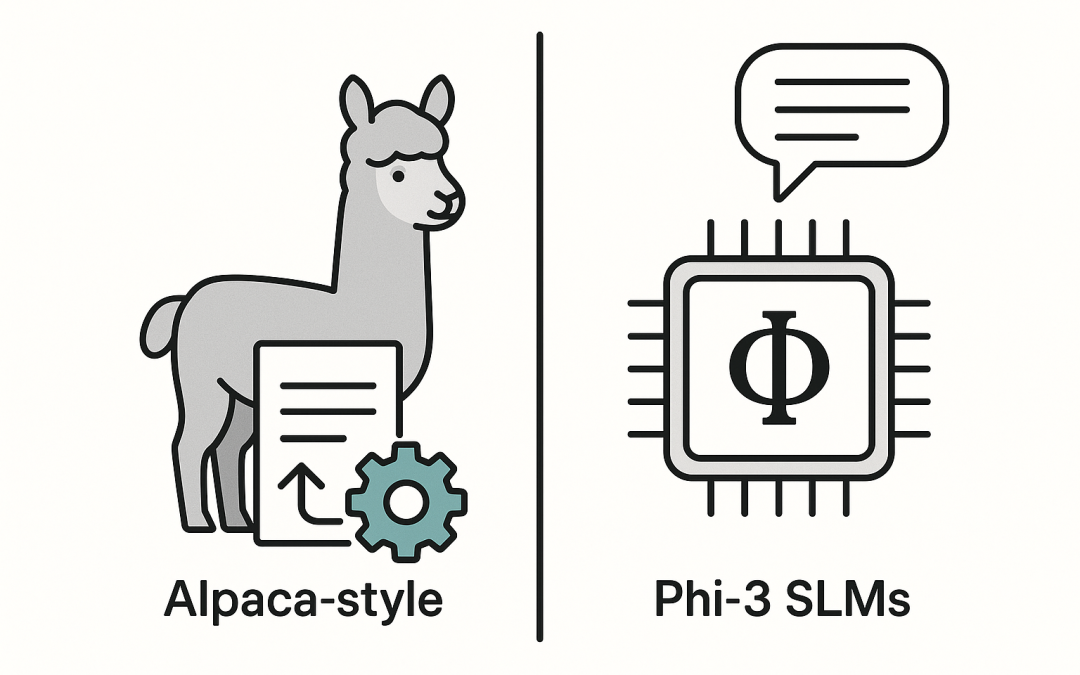
In this blog post Alpaca vs Phi-3 for Instruction Fine-Tuning in Practice we will unpack the trade-offs between these two popular paths to instruction-tuned models, show practical steps to fine-tune them, and help you choose the right option for your team. Instruction...
by CPI Staff | Sep 15, 2025 | AI, Blog, LLM
In this blog post Preparing Input Text for Training LLMs that Perform in Production we will walk through the decisions and steps that make training data truly useful. Whether you’re pretraining from scratch or fine-tuning an existing model, disciplined data prep is...